How to Get to St Barth
No international flight lands on the island, and no private jet does either. What remains is choosing your gateway.
The runway on St Barth is two thousand one hundred and nineteen feet long, which puts it beyond the reach of the smallest jet in service. Every journey therefore ends on a short final leg, from St Martin, Anguilla, San Juan or Antigua, by light aircraft, by helicopter or by sea. Here is what each of those gateways involves, and the handful of local rules that decide the rest.
The runway on St Barth is two thousand one hundred and nineteen feet long, which puts it beyond the reach of the smallest jet in service. No international flight lands there and no private jet does either, so every journey ends on a final leg, a short one, by light aircraft, by helicopter or by sea. That constraint has kept the island clear of mass tourism, and it also makes the trip a little less obvious to arrange than elsewhere in the Caribbean.
Why no jet lands here
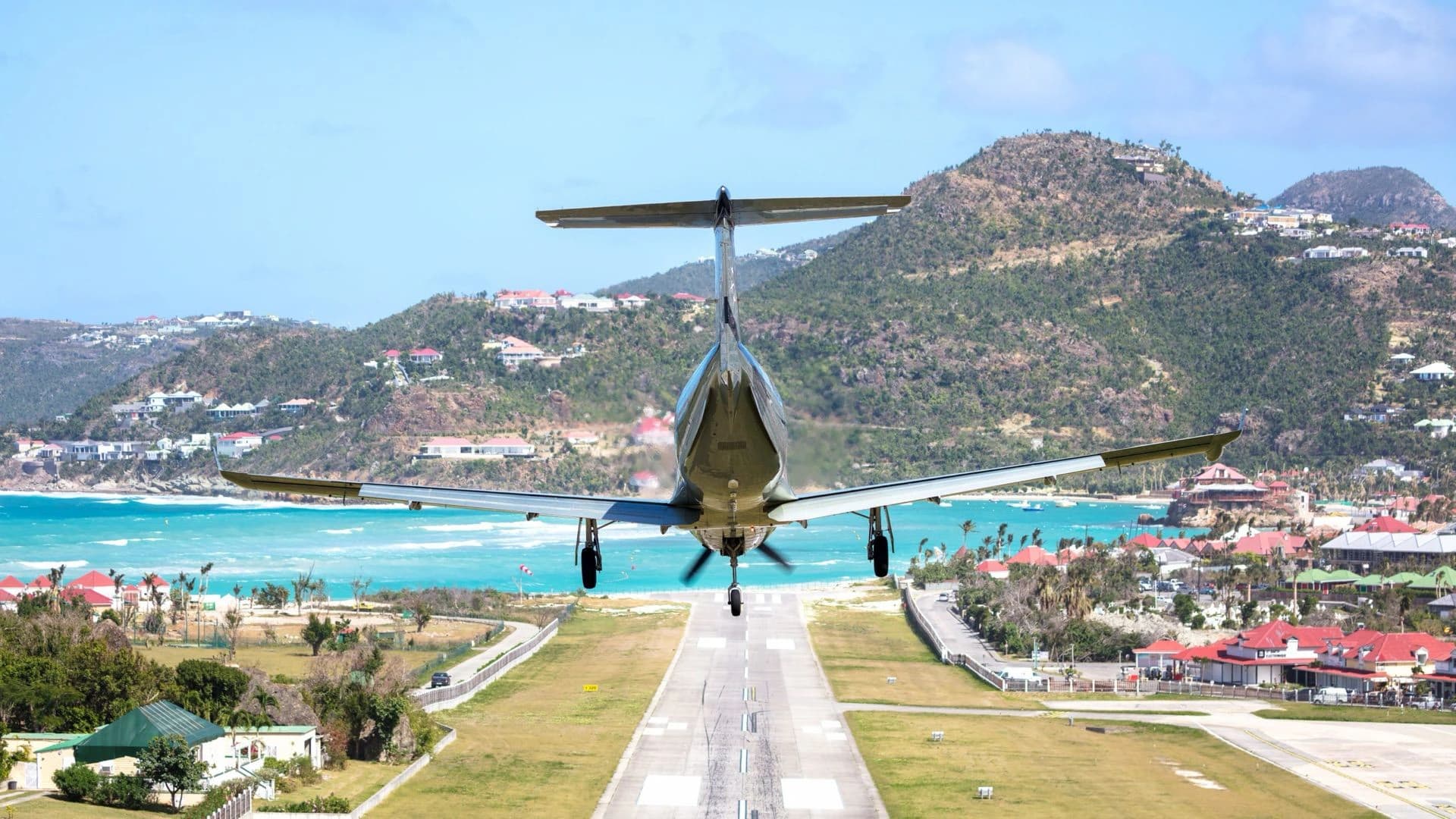
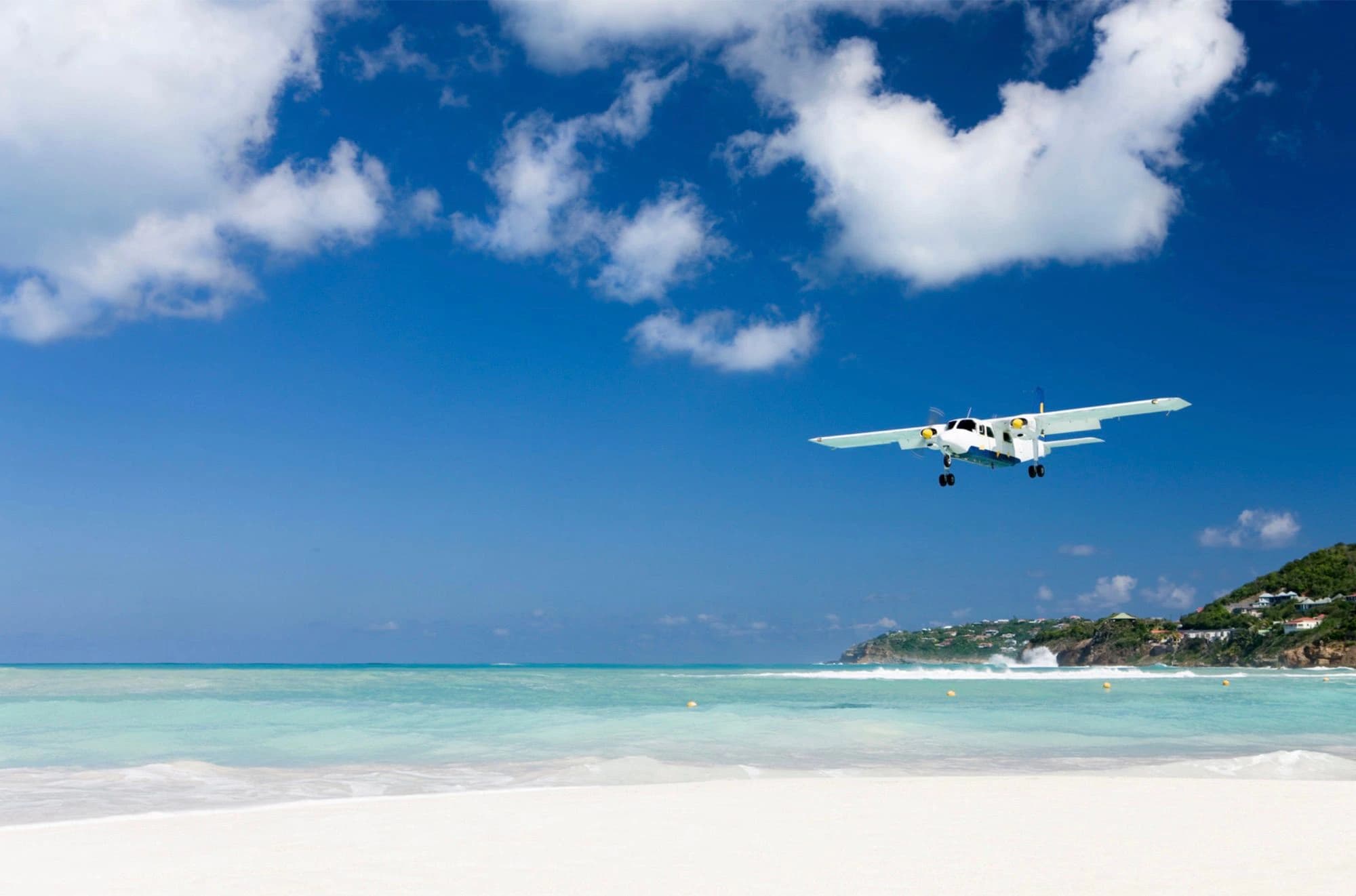
The airport at Saint-Jean is officially named after Rémy de Haenen, the pilot who first landed there in 1945 and who later became mayor of the island. Its code is SBH. The single runway measures two thousand one hundred and nineteen feet where an ordinary regional airport runs to more than six thousand, and it stops dead at Saint-Jean beach.
The approach has become something of an attraction in itself. Aircraft clear the roundabout at the Col de la Tourmente at low height, drop into a very steep descent and touch down almost immediately. The pilots who fly it hold a rating issued by the French civil aviation authority, earned after two days of ground instruction and five to ten hours of flying with an approved instructor, and a captain must have a hundred hours in the left seat before even starting that training.
What matters most in practice is that the runway has no lighting and that no movement is permitted after sunset, helicopters included. The rule allows no exception and no surcharge, and most missed connections trace back to it. The aircraft serving the island are therefore always the same, the nineteen seat Twin Otter, the Cessna Grand Caravan, the Pilatus PC-12, the largest ever cleared for this runway being a Dash 7 from another era.

Two thousand one hundred feet, with the beach at the end.
Where the private jet stops
A jet goes no further than St Martin, landing at Princess Juliana airport, code SXM, fifteen minutes of flying from St Barth. It is the most used gateway and the simplest when the timings work.
Three other airports serve the same purpose, and the right one depends on where you set out from. San Juan, in Puerto Rico, and Antigua both connect straight to St Barth, which removes St Martin from the picture entirely. Anguilla is the third, long an insider's route and a good deal less confidential now.
Going through Anguilla
Clayton J. Lloyd airport, code AXA, has a runway of five thousand four hundred and sixty three feet that takes jets. American Eagle has flown two daily services from Miami on Embraer 175 aircraft since December 2021, with a third on Saturdays, and BermudAir has opened seasonal routes from Boston, Baltimore and Newark. A runway extension to seven thousand feet is under way and due to finish this year, which will open the island to larger aircraft again.
That leaves about twenty miles of sea. St Barth Commuter flies the link on charter from Clayton J. Lloyd, fifteen minutes on a Cessna Grand Caravan. The helicopter covers it too, in around ten minutes. A private boat leaves Blowing Point and reaches the Gustavia quay in roughly an hour, provided passport copies have been sent forty eight hours ahead, since you change territory on the way.
The route appeals most to travellers adding a night or two on Anguilla, and to those whose flight from the United States lands there earlier than it would at St Martin.
From St Martin
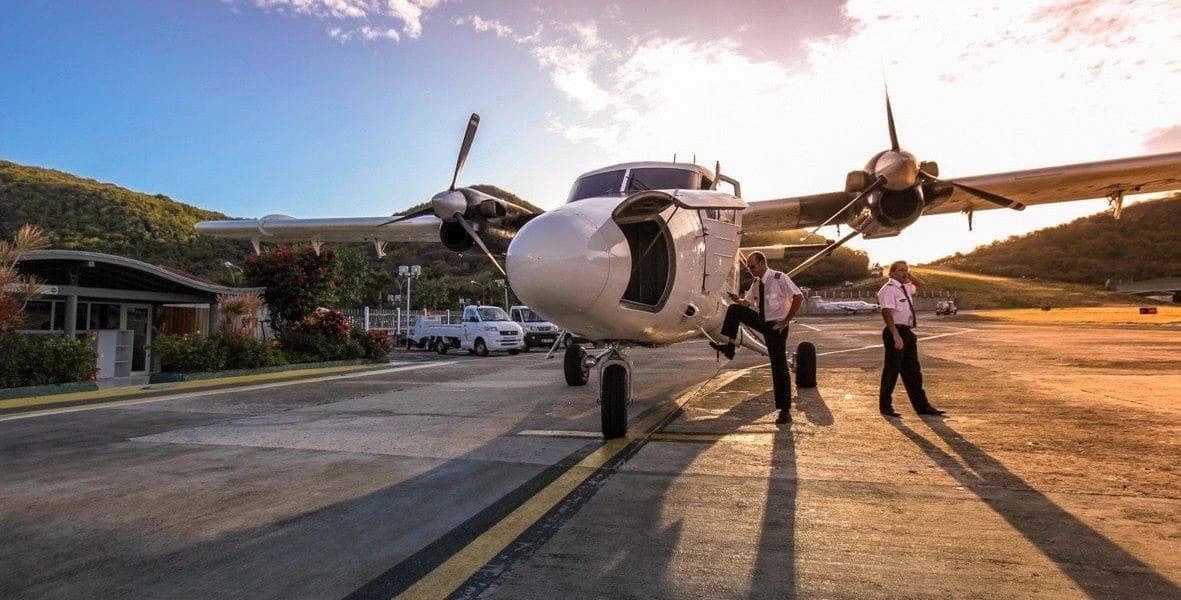
Winair links Princess Juliana to Saint-Jean several times a day on a Twin Otter, a nineteen seat twin propeller aircraft, and the flight takes fifteen minutes. Hold baggage is capped at fifty pounds per person, with holds built for soft bags, so large hard shell cases regularly cause trouble at the desk.
St Barth Commuter, the island's own airline, founded in 1994 and based at Saint-Jean, flies the Cessna Grand Caravan from Princess Juliana, but also from Grand Case on the French side of St Martin, and from Guadeloupe. That last route is routinely overlooked by travellers from France, who route through the United States without realising they could reach the island through the Antilles.
Expect a hundred and fifty to two hundred and twenty euros per person each way, depending on the season. The difficulty lies less in the fare than in the connection. Ninety minutes between the long haul landing and the light aircraft departure is a reasonable minimum at SXM in high season, and we prefer two hours when the flight arrives off a European night.
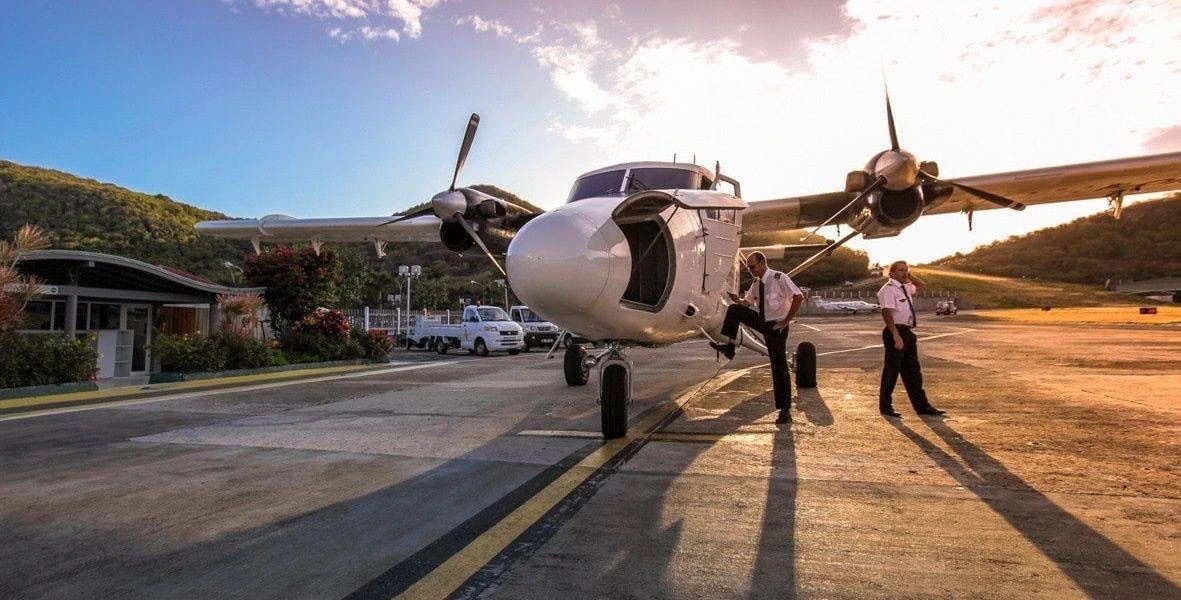
Fifteen minutes of flying, and the day begins.
From San Juan or Antigua
Tradewind Aviation serves St Barth from San Juan, Antigua and St Thomas year round, on the Pilatus PC-12, eight passengers and two pilots, about fifty minutes from San Juan. For anyone coming from the United States the appeal is clear. San Juan takes a great many direct flights from New York, Miami or Boston, and the connection happens in a private terminal, with no baggage reclaim and no queue. It costs more than routing through St Martin, but it removes the exact point where most journeys come apart.
The helicopter
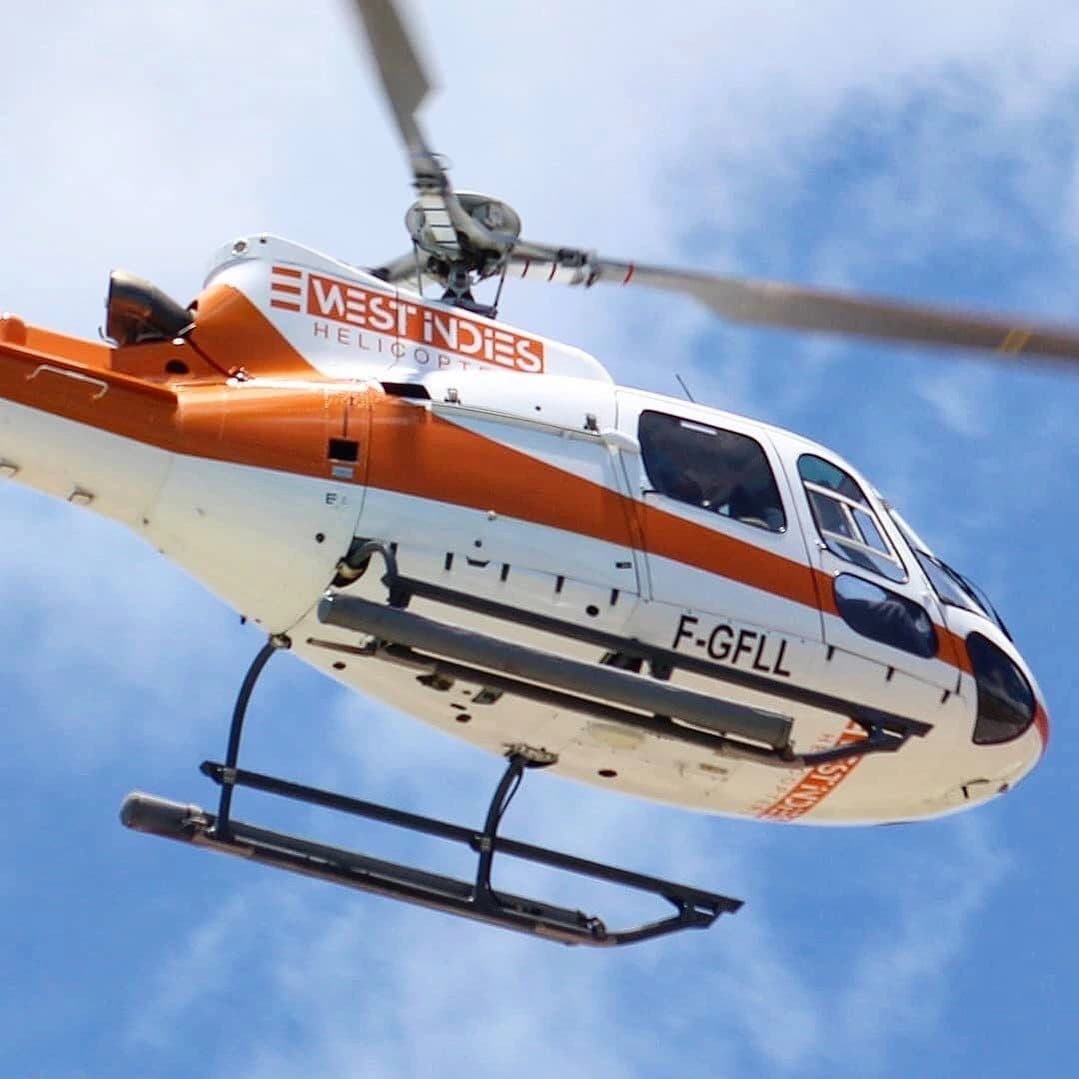
Corail Helicopters, based at Grand Case since 2004, and West Indies Helicopters both fly the link from St Martin and from Anguilla. The machines range from the Robinson R44, three passengers, to the Airbus AS355N Écureuil which takes five. You charter the aircraft rather than the seat, which makes it reasonable from four people up, for an order of two thousand euros depending on season and model. The flight lasts ten minutes, the aircraft lands on the same runway as the planes, and it follows exactly the same sunset rule.
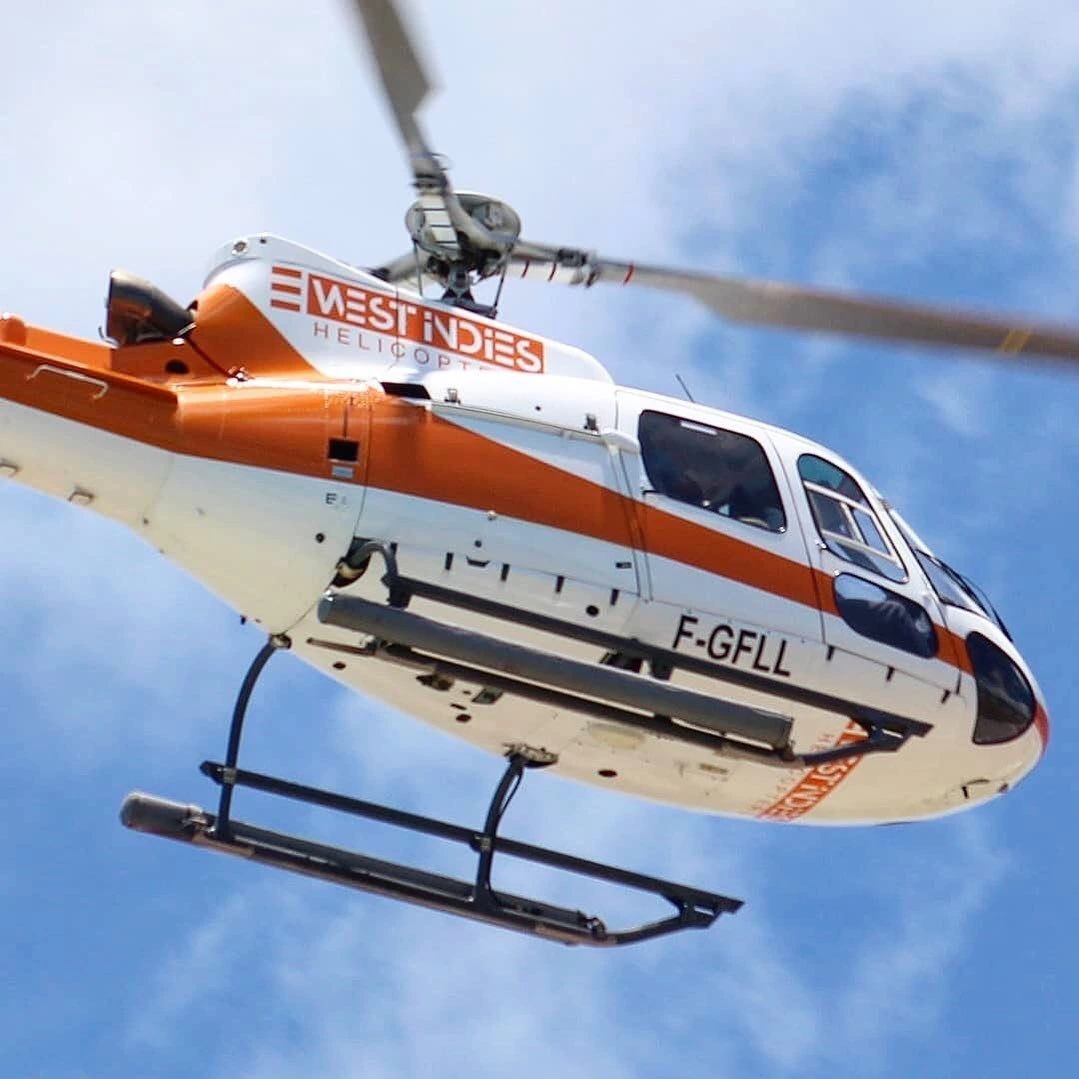
Ten minutes across the channel.
The ferry
Great Bay Express leaves from Philipsburg on the Dutch side and reaches Gustavia in forty five minutes, several times a day. Voyager leaves from Marigot on the French side and takes an hour and twenty. Both dock at the foot of town, which spares you the airport, and Oyster Pond has not been served since one of the operators wound up in the spring. Expect sixty to a hundred and ten euros per person each way.
The channel between the islands is not always in a good mood, the crossing runs into the wind and the swell, and delicate stomachs generally prefer the plane. The ferry imposes no baggage limit at all, though, which makes it the best answer for a large family or a long stay.
The private boat
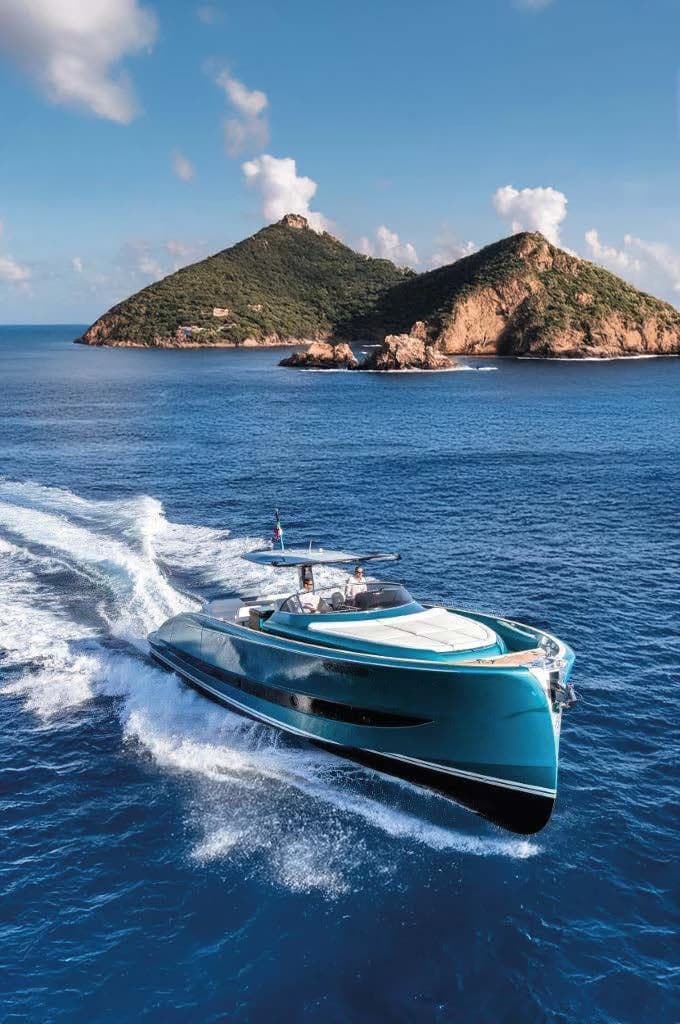
A private transfer from St Martin or from Anguilla leaves at the hour that suits you, from the marina of your choice, and drops you in Gustavia. We use it mainly when a jet lands after the last air rotation, and it saves an evening more often than you would think.
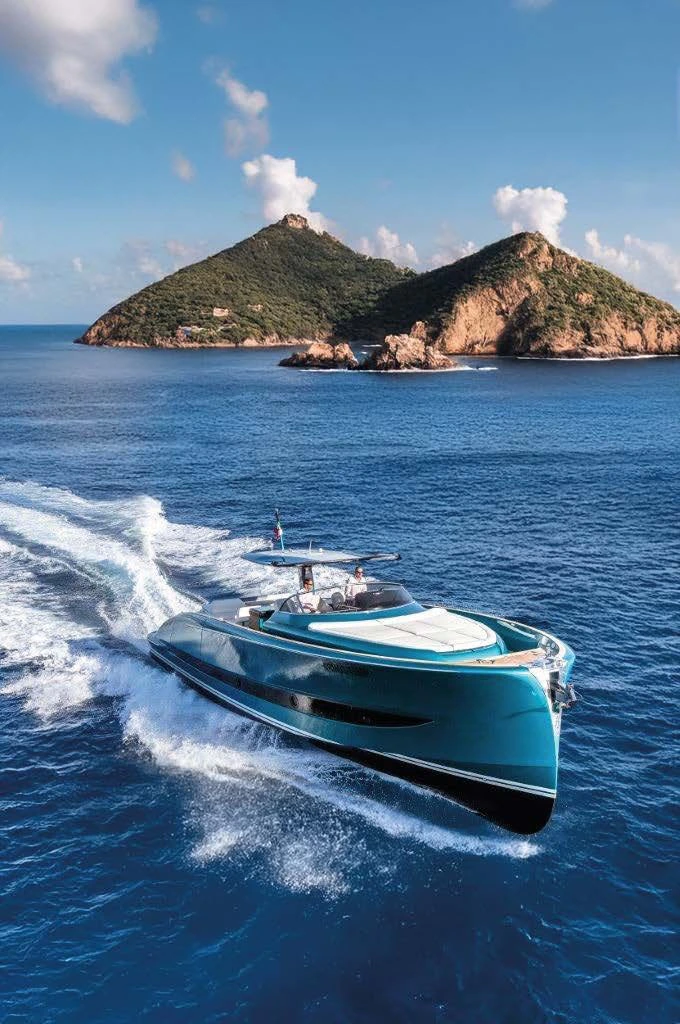
The private transfer, once the last flight has gone.
If you are arriving on your own boat, Gustavia is the island's only port of entry. You call the harbour office on VHF channel 12, call sign Port de Gustavia, ideally two hours out, and the captain then reports to the port office on the quay with the vessel's papers and passports for everyone aboard. Online pre clearance is available twenty four hours ahead. The office opens from seven in the morning to half past five, every day of the year.

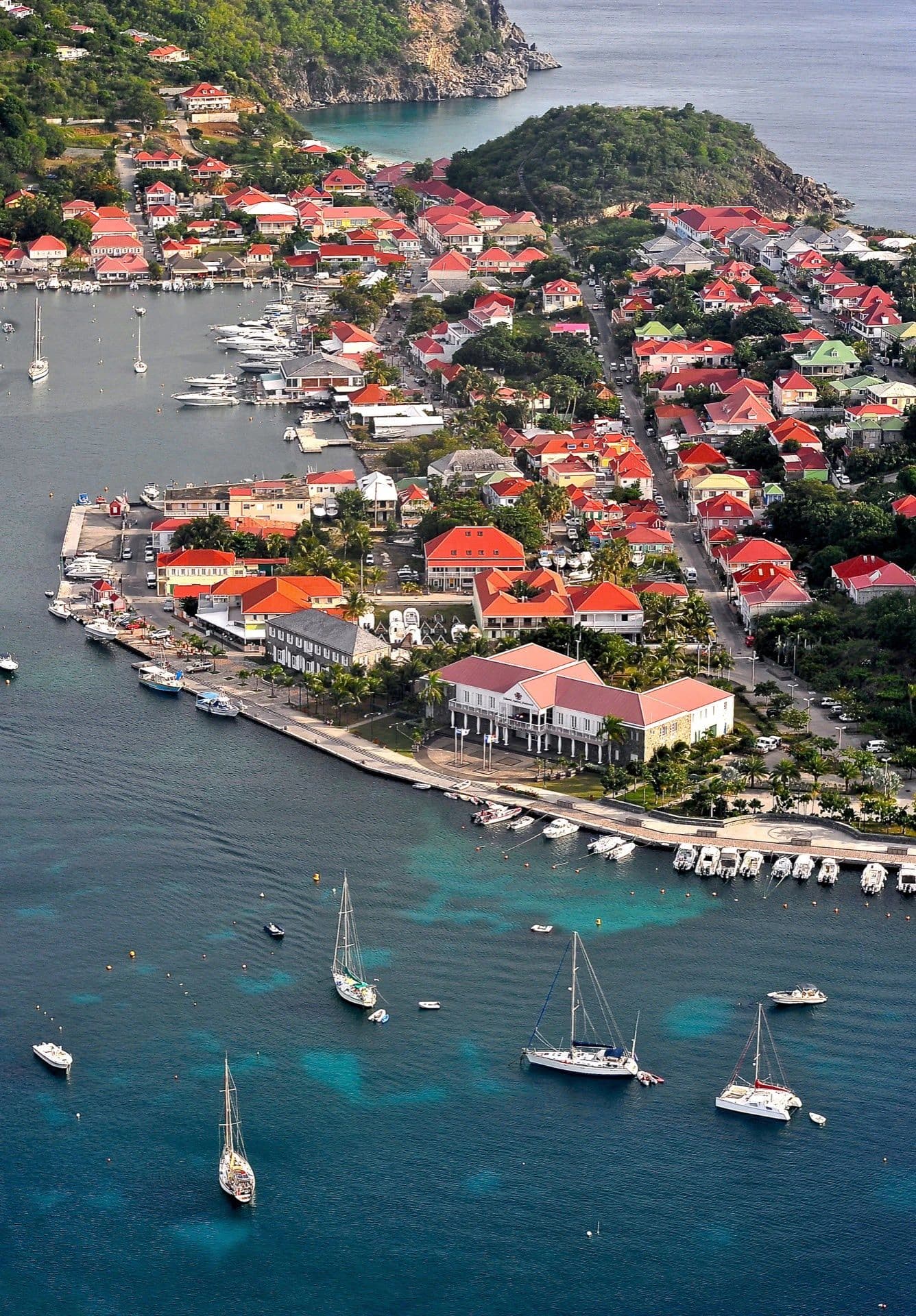
The Gustavia quay, the island's only port of entry.
What decides the rest
The sun, first of all. In December darkness falls a little after half past five, and a long haul flight landing at SXM late in the afternoon will cost you a hotel night on St Martin or a crossing by boat. It is the first thing we look at when a flight plan reaches us.
Baggage next, fifty pounds in the hold on scheduled flights and holds designed for soft bags, something the ferry and the private boat settle at once if you travel heavy. And the connection, ninety minutes at SXM as a minimum, which we check before our clients book anything at all.
What we handle
We organise the whole journey, private jet to St Martin, Antigua or Anguilla included. We book the leg into St Barth, aircraft or helicopter, or the private boat when the timing will not hold. We provide assistance at the connecting airport between your arrival and your final flight, and we meet you at Saint-Jean to take you through to the villa.
Send us your long haul flight times and we build the rest around them.
Gallery